Land types

Sell raw acreage.

Unimproved ground with no utilities, no survey, and nothing done to it in years. This is the most common thing we take on, and the category where owners have the least information to go on.

The legal description may be the first problem

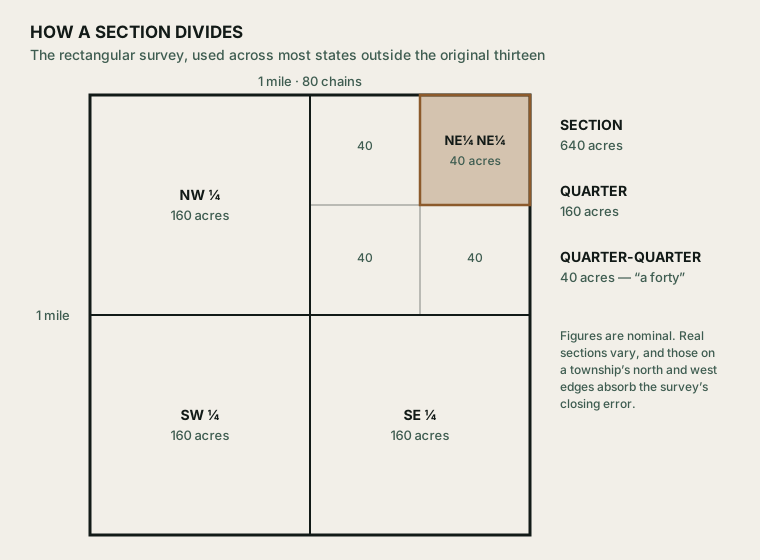
Older raw parcels are frequently described by metes and bounds referencing monuments that no longer exist, or by aliquot parts that do not close. A defective description does not prevent a sale, but it does mean a survey before a title company will insure it. We find this often enough that we treat it as a normal cost rather than a surprise, and where a survey is required to close, we arrange and pay for it.

Nobody knows where the boundaries are

On unimproved ground with no fence and no recent survey, the corners are usually unlocated. That matters when a neighbor has been mowing, storing equipment, or running cattle across part of it, because long-standing use can ripen into an adverse possession or prescriptive easement claim in most states. If a neighbor has been using part of your parcel for years, tell us — it is fixable, but only if it is known.

Access is the question that decides the price

The single largest determinant of raw land value is whether there is recorded legal access to a public road. Not a two-track you have always used, not a neighbor's permission, but a recorded easement or direct frontage. A tract with deeded access can be worth several times the identical tract without it. This is also the most common thing owners are wrong about, in good faith, because access by habit feels indistinguishable from access by right until it is tested.

Utilities and the cost of reaching them

Distance to the nearest power line, and whether the parcel can support a well and septic, determine whether it is a homesite or purely recreational. Bringing power a half mile can cost tens of thousands of dollars, and a failed perc removes the residential buyer pool entirely. These are ordinary, quantifiable numbers, and they are most of what separates two superficially identical parcels.

Taxes accumulate quietly

Raw land generates no income and is easy to forget, which is why so much of it carries delinquent taxes. Notices go to an address that may be decades out of date, and owners genuinely do not know they are behind until a tax sale notice reaches them. If that is your situation, the delinquency is settled from proceeds at closing and does not need to be cleared first.
Valuation

What moves the number

What moves the number on raw acreage.

Factor Effect on value
Recorded legal access to a public road The dominant factor. Landlocked ground trades at a fraction of accessible ground.
Distance to power and cost to extend it Directly deducted. A long extension can exceed the land value.
Well and septic feasibility Separates homesite pricing from recreational pricing.
Whether the legal description is sound A defective description means a survey before title can be insured.
Topography, drainage, and usable share Steep, wet, or floodway acreage is priced far below usable acreage.
Zoning and minimum parcel size Determines whether it can be split, built on, or only held.
Encroachments and adverse use by neighbors Unresolved claims are a title risk buyers discount heavily.

Questions

Selling raw acreage

I do not know where my property lines are. Can I still sell?

Yes. Unlocated boundaries are normal on raw land and rarely stop a sale. If title work shows the legal description is defective or a neighbor's use suggests a boundary dispute, a survey may be needed before a title company will insure the transaction — and where that is the case, we arrange and pay for it rather than asking you to.

How do I find my parcel number?

Your county assessor can find it from your name, and most counties now have a searchable property lookup online. Your annual property tax statement also shows it. If you cannot locate it, give us the county and the name on the deed and we will find the parcel ourselves — this is a routine part of our research, not something you need to solve first.

My neighbor has been using part of my land for years. Does that matter?

It can, and it is much better raised now than at closing. Long-continued use can mature into a prescriptive easement or an adverse possession claim in most states, which is a title risk a buyer will discount for. These situations are usually resolvable — often with a boundary line agreement — but only if they are identified early.

Get an offer

Tell us about the parcel

State, county, and parcel number is enough to start. We reply within one business day.

No listing agreement and no obligation. We reply within one business day.