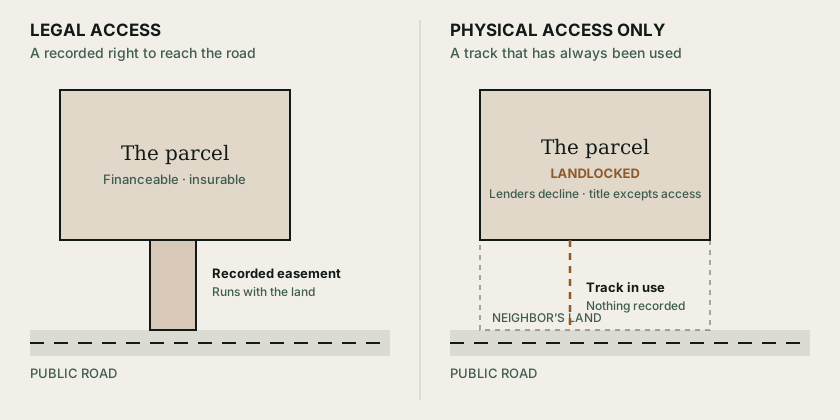
Using a route is not the same as having a right to it
The most common situation we see is an owner who has driven the same track for thirty years and reasonably assumes that constitutes access. If nothing is recorded, it is permission, and permission ends when the neighboring parcel changes hands or the relationship sours. A buyer's title company will find nothing in the record and will treat the parcel as landlocked regardless of how long the practice has continued. The distinction is invisible until it is tested, and then it is the whole value.
An easement by necessity may already exist
Most states recognize an implied easement by necessity where a parcel became landlocked at the moment a common owner divided the land — the law presumes the parties did not intend to create an unusable parcel. Establishing it requires tracing the chain of title back to that severance, and it generally requires a court action to confirm. It is a real remedy rather than a theoretical one, but it takes time and legal cost, and it is not available where the parcel was landlocked from the outset.
Prescriptive easements, where long use counts
Where use of a route has been open, continuous, and without permission for the period your state requires, a prescriptive easement may have arisen. The difficulty is the "without permission" element: if the neighbor allowed it as a courtesy, that friendliness generally defeats the claim. Evidence matters here — how long, how visibly, and whether anyone ever objected.
Who owns the ground between you and the road
This is the practical question that sets the price. A single cooperative neighbor who might grant a recorded easement is a very different situation from five separate owners, or from an intervening parcel held by a government agency or a timber company with a policy against granting access. We look at who controls the route, what they have done before, and whether a negotiated easement is realistically purchasable — because a buyer is really buying the probability of solving it.
What landlocked ground is actually worth
Substantially less than the same acreage with recorded access, and the discount is real rather than punitive. Without access the parcel cannot be built on, cannot be financed by most lenders, cannot be logged, and can generally only be sold to an adjoining owner. That narrow buyer pool is the reason for the discount. We will show you the comparables and the reasoning rather than simply quoting a lower number, and if we think an easement is obtainable, we will say so.